Showing posts with label comparison. Show all posts

Tuesday, October 21, 2014

North and South - Mr. Thornton.

The BBC miniseries, North and South, exhibits some of the best casting I have ever seen. I am now reading the book on which it is based, bearing the same name, and written by Elizabeth Gaskill.

All the main characters fit very well with their descriptions from the book, Today I'm just going to focus on the remarkable similarities between the Mr. Thornton of the book, and Mr. Thornton as played by Richard Armitage.

The book describes Mr. Thornton thus,
"Now, in Mr. Thornton's face the straight brows fell low over the deep-set earnest eyes, which, without being unpleasantly sharp, seemed intent enough to penetrate into the very heart and core of what he was looking at. The lines in the face were few but firm, as if they were carved in marble, and lay principally about the lips, which were slightly compressed over a set of teeth so faultless and beautiful as to give the effect of sudden sunlight when the rare bright smile, coming in an instant and shining out of the eyes, changed the whole look from the severe and resolved expression of a man ready to do and dare everything, to the keen honest enjoyment of the moment, which is seldom shown so fearlessly and instantaneously except in children." (North and South, chapter 10)

In the movie, not only does Richard Armitage fit this description, but the way he played the character fits as well. His eyes were piercing, he looked severe, and at that moment when he smiled in the movie near the end, it was like the sun burst forth suddenly from behind clouds and it seemed as if he was entirely wrapped up in that moment.

Here is a set of pictures to illustrate this description and demonstrate how they coincide:

"The straight brows fell low over the deep-set earnest eyes...seemed intent enough to penetrate...The lines in the face were few but firm, as if they were carved in marble and lay principally about the lips...the severe and resolved expression of a man ready to do and dare everything."


"...when the rare bright smile, coming in an instant and shining out of the eyes, changed the whole look from the severe and resolved expression of a man ready to do and dare everything, to the keen honest enjoyment of the moment, which is seldom shown so fearlessly and instantaneously except in children."

One difference is that his teeth are hardly seen when he smiles, while in the book it seems they are visible when he smiles, although much of the smile comes from his eyes: "a set of teeth so faultless and beautiful as to give the effect of sudden sunlight when the rare bright smile, coming in an instant and shining out of the eyes."

All the same, I am amazed at how well he fits the description in the book in look and manner. 

Tuesday, July 15, 2014

The Hobbit and Huntingtower

The Hobbit was written by J.R.R Tolkien and published in 1937. The first two installments of the film trilogy by Peter Jackson were released in 2012 and 2013.  Huntingtower was written by John Buchan and published in 1922.

The Hobbit (especially the film) and Huntingtower have a number of commonalities:

1. The main character from The Hobbit, Bilbo Baggins is 50 years old while the main character of Huntingtower, Dickson McCunn is 55.

2. Both Bilbo and Dickson are well to do, respectable people.

3. Both suddenly and unexpectedly set off on adventures.

4. Both had small companions in strange garb.

5. Dickson is fond of books and brings some with him, while books are also important to movie Bilbo who says, "I miss my books, I miss my armchair..." (etc.)

6. Dickson was a grocer until he retired, and in The Hobbit film one of the dwarves remarks of Bilbo, "He looks more like a grocer than a burglar."

7. Dickson is an ISFJ and Bilbo is said to be an ESFJ.

8. Bilbo (in the movie, but not in the book) and Dickson set off with walking sticks.

9. Dickson was setting forth on a walking holiday, and Bilbo liked walks, "I got as far as Frogmorton once," (The Hobbit: An Unexpected Journey).

10. Bilbo said, "It's a dangerous business, Frodo, going out your door. You step onto the road, and if you don't keep your feet there's no knowing where you might be swept off to," (The Lord of the Rings). This accurately describes the adventures of Dickson, he set out on a holiday and was quickly swept up into an unexpected adventure.

11. Dickson and Bilbo (film) had sandy colored hair.

Bilbo Baggins, played by Martin Freeman


Saturday, April 19, 2014

My Museum of Memories

Memory is a funny thing. Certain things we retain, and others we forget. Mark Gungor compares men's brains to boxes and women's to ball of wire. See the video on Youtube.  BBC's Sherlock has a "Mind Palace" which is like some extra deep place he'll go to retrieve information stored there to solve cases.

I've decided that my mind is like a museum. It's not a particularly well-ordered and logically laid out one either. Additionally, it's got a lot of cluttered rooms and a few with almost nothing in them. My museum contains little movie clips I play over and over, snapshots of the past, and other artifacts of memory. Some memories I frequent more often, they're on display. Others are stuck in the back rooms, not particularly special, just tossed into a corner somewhere. Others are like precious, fragile treasures I hide away to protect and keep them alive, I can't share those moments right away and hardly dare look at them myself lest I damage them with rough handling.

Yet time tells on my memories and like the Mona Lisa, they fade. Rusty old swords lie in some corners. It doesn't matter how hard I try to preserve them, whether by sharing, secreting them away, or playing them over and over. The closer I look at my museum pieces, the more I notice the decay, the blurred detail on a picture, or the missing page in a manuscript. I cringe at the faded paint and the empty casing were a gem used to be lodged but has now tumbled out of its setting. I might find it eventually in some unexpected corner...

Some of my memories I don't like, they're the ugly paintings. In these cases, time is often my friend. With time the garish colors fade, the wine mellows, and the pain no longer stings the same. And they say hindsight is 20/20 vision. I can see the good that came from pain and I can savor triumphs without the suspense and agony of the moment. Success memories are like award plaques, medals, and trophies in my collection.

My memory paintings attempt to capture a moment
in time, but what is a picture to the moment itself? If I write them down, the actual moment slips away like sand through an hour glass. It's like pressing a leaf: some of the colors are preserved but the leaf is dry and brittle, and not as bright and glossy as it once was. Artifacts and crumbled journals help us see the past, but they can't take you there. Still, I catalogue my treasures and I write my journals, but it's not the same.

I cannot share my memory museum, I walk these halls alone. When I share a memory it's like giving someone a postcard from the gift-shop. It's a photocopied memory that I let others see. Just as my memories are removed from the actual moment, so too my attempts at sharing them with others are removed another step further from that moment.

It's part of  my personality, I think, to capture and preserve, document, and convey. I'm always writing or taking photos. As a Sensor (Myers-Briggs), I learn from my past experiences, through physical sensations. And I want to share what I experience. How do I capture golden drops of sunlight that flicker through my lashes on a balmy summer morning? I add another artifact (a sensation) to my collection like one adds a painting to a gallery wall. A painting expresses something of its subject, but it's not like being there, in the scene in my mind, experiencing it the way I felt it. So I describe, like a painter paints, I add my own interpretation, how I saw it, and I try to express just what that moment felt like to me.

Saturday, March 22, 2014

The Parallels of King David and Robin Hood

I was sitting in a Panera talking with my friend, Renée, when she told me that she saw many similarities between the life of King David of Israel and the story of Robin Hood. Skeptical and surprised, I listened as she began to lay out the parallels and earnest excitement radiated from her deep brown eyes as she attempted to convince me.  I was been astounded, and a swirl of thoughts and possibilities rustled through my mind. The similarities were clear and I saw potential blog material. Before long she cried out with animation, "Your face! You're not sure what you just heard!"
"No, you're right!" I stuttered out, and continued, "My blog is all about comparisons. I was thinking about maybe you could do a guest post for my blog."
Fortunately she was excited with this idea, and so I am pleased to present the first ever guest post on Lore and Literature:

The Parallels of King David and Robin Hood
By Renée Du'Quatre

 Ever since I was a child, I have loved the story of Robin Hood. It has always been one of my favorites. It’s a fun, adventurous, romantic story with memorable characters that you immediately grow to love. When I was little I would take my toys, assign them a character from the story, and play for hours.

Growing up in a Christian home I also learned all about the Bible at a young age. Biblical History was one of my favorite subjects in school and even now as an adult I still love and enjoy studying the Word of God.

 Over the years I’ve seen many different versions of Robin Hood and read over the history of King David many times. As I learned more and studied each of them individually, I couldn’t help but notice the similarities between the two legendary, historical heroes. 

I believe it started when I was still in either elementary or middle school and we had to read a novelized version of the life of King David called The Fugitive King by Elizabeth Rice Handford. It struck me then how similar David’s life (before he was crowned king) was to that of Robin Hood.

 Now, I don’t know if this is just me and how my strange, overactive mind works, but personally I don’t believe it takes a lot of imagination to see all the similarities here. 

Granted, with Robin Hood most of the details in the characters and the story line vary depending on the version you read or watch. But I think most of the details listed below are ones that most adaptations generally stick to and are traditionally accepted by those who enjoy or are familiar with the story. 

After a few days of researching I was able to compile this list:

Robin, or Sir Robin of Locksley, was a knight who was pursued by the oppressive ruler Prince John.
David was a shepherd, (who as a young man was anointed to be the next king of Israel, 1 Samuel 16:1-13), who became appointed as head over the king’s men of war, (1 Samuel 18:5) and was later resented and hunted by King Saul. (1 Samuel chapter 19.) 

Both were honorable men with titles and a promising future. Both were declared fugitives and were savagely pursued by the active rulers of their land and forced into hiding for years. (1 Samuel 26:1; 27:1.)

Both were noted as being excellent warriors. (1 Samuel 18:5-7.)

Robin is famous for using his bow and arrow.
David is known for using his sling and a smooth stone. (1 Samuel 17:40, 49.)

Both had high respect and loyalty to their kings. Robin was known for being dedicated to King Richard. David, even though he was pursued by King Saul, still refused to kill him or even do him harm. (1 Samuel 24:1-22, 26:1-25.)

Robin is known for taking down his foe, Sir Guy of Gisbourne, (in some adaptations an assassin, in others a fellow nobleman) who was sent to kill him.
David is known for taking down the giant, Philistine champion, Goliath. (1 Samuel chapter 17.)

Robin had his ‘Merry Men.’
David had his ‘Mighty Men.’ (2 Samuel 23:8-39.)

Robin’s best friend was ‘Little John.’
David’s best friend was Prince Jonathan. (1 Samuel 18:1-4, 19:1-20:42.)

Jonathan and David used a bow and three arrows as a signal in I Samuel 20:18-23; something Robin and Little John would be accustomed to do. (In 2 Samuel 1:17-27 David wrote The Song of the Bow in mourning over the death of Jonathan.) 

Robin was in love with Maid Marian who (in certain versions) was a relative (or ward) to the king (in early adaptations she is a shepherdess).
David’s first wife, Michal, was the second daughter of King Saul. (1 Samuel 18:17-30.) 
Both women were used by the callous rulers, (the men whose responsibility it was to protect them) as bait/a snare in order to trap the men they loved. (1 Samuel 18:17-30) However, instead of trapping them they proved to be helpful assets in their escape. (1 Samuel 19:15-17.)

Robin and his ‘Merry Men’ liked to sing and are known through ballads.
David was a musician who wrote many songs and poems.

Both were God-fearing men, (David was a man after God’s own heart [1 Samuel 13:14, Acts 13:22]) who were associated with godly men. 

Robin was good friends with Friar Tuck.
David was anointed by the prophet Samuel (1 Samuel 16:1-13) and goes to him for safety when hunted by King Saul in 1 Samuel 19:18. Later when he is king, David is rebuked by Nathan the prophet for sinning with Bathsheba (2 Samuel 12:1-14) and by the prophet Gad for an unspecified sin in 2 Samuel 24:1-17.  (Possibly his sin was taking a census of the people, an act of pride instead of relying wholly on God.) Gad is also referred to as David’s Seer in 2 Samuel 24:11. 

Robin would occasionally disguise himself like a beggar or farmer to spy on his enemies or extract information from them.
David pretended to be insane before Achish the king of Gath when he was in fear of his life. (1 Samuel 21:10-15.)

Although they are both highly acclaimed heroes and usually praised for their valiant efforts, they are also notoriously remembered for their faults. Robin was an outlaw and a thief. David was an adulterer and a murderer. 

I’m sure there are probably more similarities to the two heroes that I missed.

Overall, my reason for pointing out these similarities is purely out of love and respect for both legendary heroes. It was fun for me to consider, and then take the time to do some personal research on each man.  

I hope you enjoy reading as much as I enjoyed researching. 

Note: I put Biblical references to David but no references to Robin, because the Bible is literal, factual history whereas the stories of Robin Hood (as I previously mentioned) are mostly based off ballads and traditions that vary; most of which are listed on the Wikipedia website and can be referenced there if desired.

Monday, May 13, 2013

A Passion for Rings

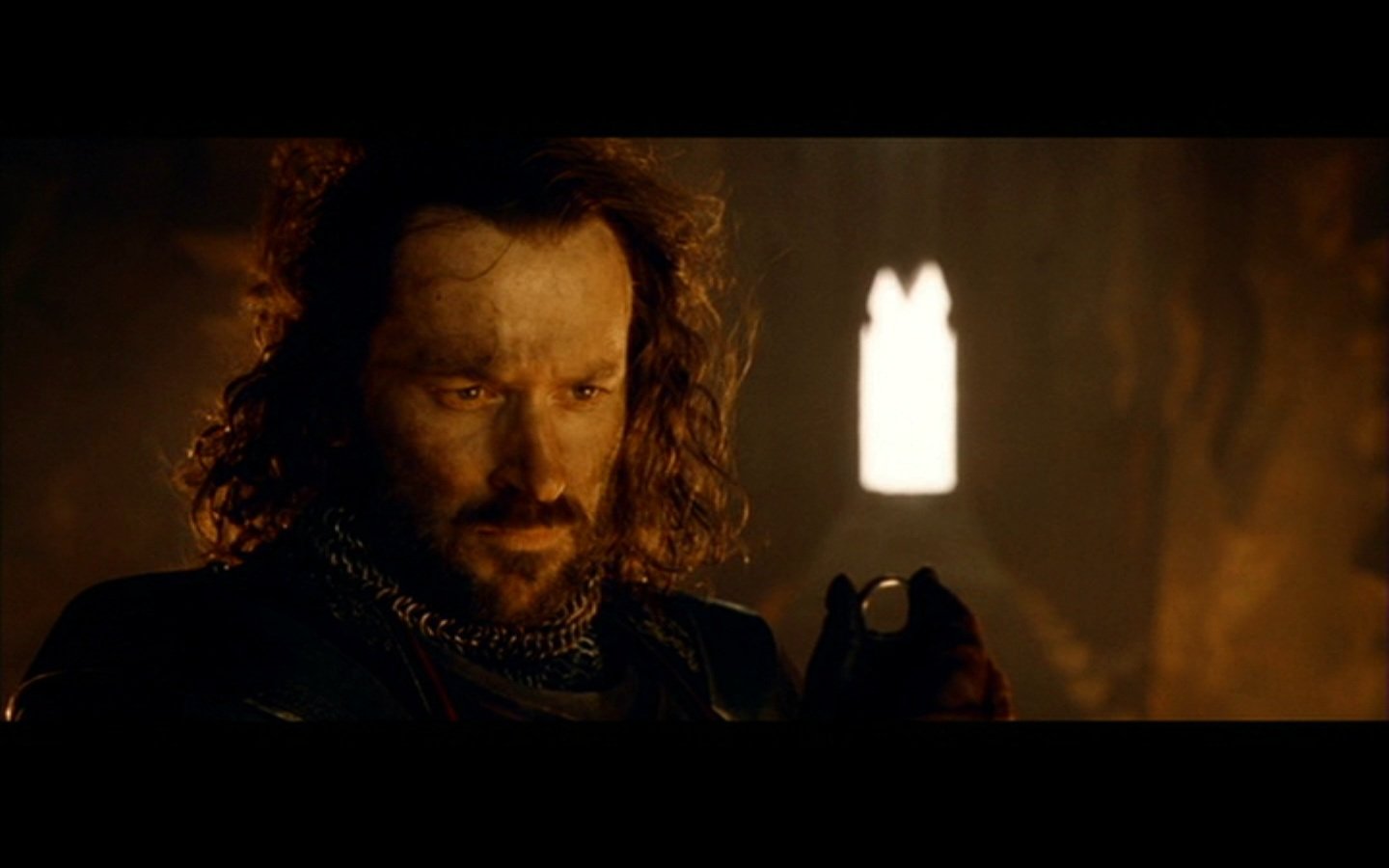
In The Saga of King Hrolf Kraki there is a ring that is coveted greatly. The passion for this ring and the terms in which it is spoken of is similar to The One Ring from The Lord of the Rings, by J. R. R. Tolkien.

The story of this ring begins thus: "A ring owned by King Helgi was a widely famed treasure. Both brothers wanted it, and so too did their sister Signy."

King Hroar offered to give his brother, King Helgi, his share of the kingdom in exchange for the ring, saying, "I want the ring, the one that is the best treasure in your possession and that both of us would like to own." Basically, Hroar saw this ring as worth half a kingdom.

Helgi agreed to this deal, "after such a speech, nothing else is fitting but that you should have the ring."

However, that is not the end of the episode. Hrok, with the encouragement of his mother Signy, also decided he wanted the ring. He demanded that King Helgi (his uncle) give him a third of the kingdom or "the great ring." Helgi informed him that Hroar had the ring and that his claims were arrogant.

Isildur and The One Ring
Hrok then went to Hroar, and asked for the ring. Hroar replied, "I have given so much to get this ring that I will by no means part with it."

Hrok then asked to see it, saying he wanted to know if it was really "as much a treasure as it is claimed." Hroar readily showed it too him and Hrok threw it into the sea after saying, "I have never seen a comparable treasure, and the reason you esteem the ring so highly is obvious. The best solution, it seems to me, is that neither of us, or, for that matter, anyone else should enjoy it." He had no right to such an action. His claim on the ring was small enough, and Hroar had traded half the kingdom for it. Hroar chopped of Hrok's foot in response. After healing, Hrok assembled an army with which he defeated and killed Hroar. Helgi then defeated Hrok and instead of slaying him, broke all his limbs so that he was a cripple the rest of his life. And this was all between family! Many people searched the waters for the ring and Hroar's son, Agnar, finally found it after diving for it.

So, that's a summary of the ring episode. Although this ring was not imbued with the magical and evil properties that The One Ring possessed, it was coveted in much the same way, resulting in wars and the loss of limbs (Frodo lost his finger, Hrok, his foot). Hrok referred to it as "the great ring," giving it a title, much like, "The One Ring."  In The Lord of the Rings, it was suggested the the ring be thrown into the sea, but that idea was rejected because it could be found again eventually.

However, Hroar's ring could have been an arm ring and not a finger ring like The One Ring.
 
The Saga of Hrolf Kraki. Translated by Jesse L. Bylock. Published by Penguin Books, 1998.

Thursday, January 31, 2013

The Icelandic horse and its home

Once out of Reykjavik and the lava fields, there are horses basically everywhere you look.

I felt like I was driving through Rohan as it is depicted in the film The Lord of the Rings. The horses grazed on the yellow grass on the flat plains, sometimes broken by ridges and large rocks, or small hills. Behind it all the blue mountains capped with white snow rose with majesty.

Horses

The plains

Driving through Rohan yet in Iceland
Rohan was shot in New Zealand. It's interesting how similar the landscape is.

Although the landscape is similar to Rohan, the horses are not like those in the book or film. The book says, "Their horses were of great stature, strong and clean-limbed; their grey coats glistened, their long tails flowed in the wind, their, manes were braided on their proud necks." -The Two Towers, by J.R.R. Tolkien 

The Icelandic horse is a short animal (extra shaggy in my photos because it is winter). Foreign horses are not allowed to enter the country and once an Icelandic horse leaves the country it can never return, so all horses on the island are purebred Icelandic horses.

The horses are generally friendly too. Whenever they saw us nearing the fences, a few of them would come over to it and let you pet them. Also, they seem to be kept in groups. I don't remember seeing a lone horse in a pen.

Coming to say hello
Grass
Shaggy coat

Iceland is my home

All photos are my own. Please give all photo credit to Edana A.


Wednesday, January 30, 2013

Þingvellir - That Great Wonder of Iceland

On my trip I visited Þingvellir. It was beautiful in the setting sun with the yellow grass, the rocks, the many branched river, and the distant snow capped mountains. Allen French's description of this place in The Story of Rolf and the Viking Bow fit quite well with what I saw there. Granted there are some more recent buildings there now and the booths were gone, yet the landscape was the same. French calls the place "Thingvalla," and the parliament, "the Althing" instead of ingvellir" and the "Alþingi."  

"For from the plain on which they journeyed a large part had fallen clean away, many yards down, and it lay below like the bottom of a pan. The Great Rift was the name of the western precipice, and there was no way down save by one steep path....When Rolf had got down to the plain, he saw all the booths for the lodging of those who came to the Althing, ranged along the river....he went down to the Hill of Laws, where the Fifth Court sat to hear appeals. Now the Hill of Laws is cut off from the plain by deep rifts, and men showed Rolf where, to save his life, Flosi had leaped one rift at it's narrowest part and that was a great deed."  -The Story of Rolf and the Viking Bow, page 94-95 
View from the plain above, overlooking Þingvellir 
This first picture is taken while standing on the Great Rift.
The Great Rift (western precipice) is on the left side of the picture below. The flag pole is rising from the Lögberg (Law Rock) which either is the Hill of Laws, or a part of the Hill of Laws.

Down beside the precipice   


The Great Rift.


In the photo above, the smaller rocks on the left is the back of the Hill of Laws.
In the photo below, you see the view if you turn and look the other way up the rift while standing the Hill of Laws.
The Rift


Snorri's Booth
Snorri's booth is on the hill, overlooking the river where the booths where located in the story. This, however is not an inconsistency. Since Snorri was a very important man at the Althing, his could have been located there while many others were situated along the river.

Hill of Laws

I believe this is the Hill of Laws spoken of. It is actually a long hill; this is just a portion of it, but you can see that it is near the western precipice.
The Rivers

  
Above are the rivers by which the booths stood; the view from the Hill of Laws. 
 
Þingvellir   
Above is a photo I took down on the plain after crossing the rivers. Here you see the Hill of Laws with the flag pole and the Great Rift behind it.

Allen French called this place, "that great wonder of Iceland." And it really is. The place is gorgeous, my pictures do not do it justice. In a sense it is the heart of Iceland, of both the land and the country. 

It is near the place where the tectonic plates collide, the volcanic activity caused by this collision is possibly responsible for the formation of this island, and the fact that the land sits where two tectonic plates meet is responsible for the many geological wonders of this country: the volcanoes, geysers, and hot springs.  Volcanoes have played a huge role in making Iceland the land it is today. Basalt is basically everywhere you turn. And other forms of volcanic rock are also abundant.

In this place so near the edges of the plates, the country was formalized. The Alþingi began in 930 A.D. and continued for many years and after an interlude of foreign control, Iceland was declared an independent republic in 1946. A ceremony was held at the Law Rock. From the start, Iceland was different from other nations. In 930, Europe was ruled by kings, yet Iceland was a republic. There were no kings or nobility. There were chieftains and some men had more power than others, but it was still different than the other countries of the the time.

All photos are my own.

Iceland and The Story of Rolf and the Viking Bow

The Story of Rolf and the Viking Bow has long been one of my favorite books. Allen French did a wonderful job when he wrote this book for just as The Secret of Kells really captures Irish history and lore, so this book captures many elements of Icelandic history, culture, and lore.

Just some notes on Icelandic letters that are not in our alphabet and on the Alþingi:

þ makes the "th" sound in "thing" (unvocalized "th").
ð makes the "th" sound in "that" (vocalized "th").
The Alþingi is the Icelandic parliament. It began in 930 A.D. and it was in session for many years until Iceland came under foreign powers. It was started again after WWII and is currently functioning, though it is now located in Reykjavik.
Þingvellir is a plain that is its historic location. 
 
Here is a list of common elements between the book and things I've learned about Iceland or experienced on my trip.

1. The Story of Rolf and the Viking Bow was written in a saga style. Iceland has a collection of sagas called Íslendingasögur, and I am guessing that Allen French read those for he mentions some of the characters in his book. Grettir the Strong, and Njal, namely.

2. The names of at least two of the characters are/have been used recently. In the flea market I saw the name "Einar" as an author's name on a book. "Snorri" appeared on a building from the 18 or 1900s.

Location of Snorri's booth. The wall remnants date from a later time.
3. Snorri the Priest from the book was a real man. I saw the ruins of his booth at Þingvellir (the location of the Alþingi at the time of the story.) In the story, Rolf goes to the Alþingi at Þingvellir, and also to Snorri's booth there.
(See my next post for more on the Alþingi and what Allen French has to say about it.)

Allen French's description of 
Þingvellir fits with what I saw there. 

4. Rolf's family owned sheep. Woolen goods are a hot commodity in Iceland these days. They are in every tourist shop and the Icelanders themselves frequently wear woolen sweaters.

5. In the story the sheep were marked by cuts on the ears, and had to be sorted when they were brought down from summer pastures for the winter. This is still done today. Their ears are marked, the sheep are brought down according to customs set by the Alþingi (Althingi) long ago, and they are sorted using a sheep sorter.

Icelandic cliffs
6.  We are told that there was a great number of birds and that Rolf climbed the craggy cliffs for eggs and young birds. He also shot the adults with his bow. Iceland is still known for its abundance of bird colonies.

7. "Heimskur" is the Icelandic word for stupid and contains the image of one who sits at home and doesn't travel. In the book it mentions that young men would travel abroad and that it was an important part of their passage into adulthood.

8. Ghosts were treated as real in the book. Many Icelanders are a bit into mysticism and believe in ghosts or elves (short, invisible beings).

9. According to French, it was customary for men to keep whatever wealth the sea washed ashore from ship wrecks off the rugged coast. The Icelanders in Rolf's day were delighted with the goods that washed ashore. The same was true in the 1800s. People were glad to get the timbers and things from the shipwrecks, even though it was too bad about the sailors who drowned in the wreck.

One man in Reykjavik collects odds and ends from the sea and has quite a stash of large metal contraptions. The large silver object looks like a space escape pod, other objects stick up like odd towers and are gray and rusty.
What the sea brought

10. Icelanders have traditionally been farmers. Rolf and his family were farmers. Characters in the sagas and folklore were farmers too, even if they were also great warriors.

11. Fishing is also important to Iceland. In addition to his other skills, Rolf knew how to fish. In current day Iceland, dried fish is sold at the flea market and the grocery store. The story speaks of racks for drying fish in the Orkneys and also Icelanders having dried fish on hand.  They still use wooden racks for drying fish.

12. In the book, Grettir cooked his food in the geysers. A tourism video showed some people cooking food in a geyser for amusement.
Geysir (the geyser from whose name the word "geyser" is from.)


All photos are my own except the photo of the book.