Old English looks like Welsh and Icelandic combined. And yet it looks a bit like German.
Speaking of Welsh and Icelandic, double L, "ll" makes the same sound in both these languages and is unlike anything in present day English. It is a voiceless lateral fricative (Ll - Wikipedia). According to one Icelandic pronunciation video, this sound is made by placing one's tongue to one side of the mouth and blowing. It works for me.
Watch this video to hear the sound.
Showing posts with label Icelandic. Show all posts
Showing posts with label Icelandic. Show all posts
Thursday, August 22, 2013

Monday, May 13, 2013
A Passion for Rings
In The Saga of King Hrolf Kraki there is a ring that is coveted greatly. The passion for this ring and the terms in which it is spoken of is similar to The One Ring from The Lord of the Rings, by J. R. R. Tolkien.
The story of this ring begins thus: "A ring owned by King Helgi was a widely famed treasure. Both brothers wanted it, and so too did their sister Signy."
King Hroar offered to give his brother, King Helgi, his share of the kingdom in exchange for the ring, saying, "I want the ring, the one that is the best treasure in your possession and that both of us would like to own." Basically, Hroar saw this ring as worth half a kingdom.
Helgi agreed to this deal, "after such a speech, nothing else is fitting but that you should have the ring."
However, that is not the end of the episode. Hrok, with the encouragement of his mother Signy, also decided he wanted the ring. He demanded that King Helgi (his uncle) give him a third of the kingdom or "the great ring." Helgi informed him that Hroar had the ring and that his claims were arrogant.
Hrok then went to Hroar, and asked for the ring. Hroar replied, "I have given so much to get this ring that I will by no means part with it."
Hrok then asked to see it, saying he wanted to know if it was really "as much a treasure as it is claimed." Hroar readily showed it too him and Hrok threw it into the sea after saying, "I have never seen a comparable treasure, and the reason you esteem the ring so highly is obvious. The best solution, it seems to me, is that neither of us, or, for that matter, anyone else should enjoy it." He had no right to such an action. His claim on the ring was small enough, and Hroar had traded half the kingdom for it. Hroar chopped of Hrok's foot in response. After healing, Hrok assembled an army with which he defeated and killed Hroar. Helgi then defeated Hrok and instead of slaying him, broke all his limbs so that he was a cripple the rest of his life. And this was all between family! Many people searched the waters for the ring and Hroar's son, Agnar, finally found it after diving for it.
So, that's a summary of the ring episode. Although this ring was not imbued with the magical and evil properties that The One Ring possessed, it was coveted in much the same way, resulting in wars and the loss of limbs (Frodo lost his finger, Hrok, his foot). Hrok referred to it as "the great ring," giving it a title, much like, "The One Ring." In The Lord of the Rings, it was suggested the the ring be thrown into the sea, but that idea was rejected because it could be found again eventually.
However, Hroar's ring could have been an arm ring and not a finger ring like The One Ring.
The Saga of Hrolf Kraki. Translated by Jesse L. Bylock. Published by Penguin Books, 1998.
The story of this ring begins thus: "A ring owned by King Helgi was a widely famed treasure. Both brothers wanted it, and so too did their sister Signy."
King Hroar offered to give his brother, King Helgi, his share of the kingdom in exchange for the ring, saying, "I want the ring, the one that is the best treasure in your possession and that both of us would like to own." Basically, Hroar saw this ring as worth half a kingdom.
Helgi agreed to this deal, "after such a speech, nothing else is fitting but that you should have the ring."
However, that is not the end of the episode. Hrok, with the encouragement of his mother Signy, also decided he wanted the ring. He demanded that King Helgi (his uncle) give him a third of the kingdom or "the great ring." Helgi informed him that Hroar had the ring and that his claims were arrogant.
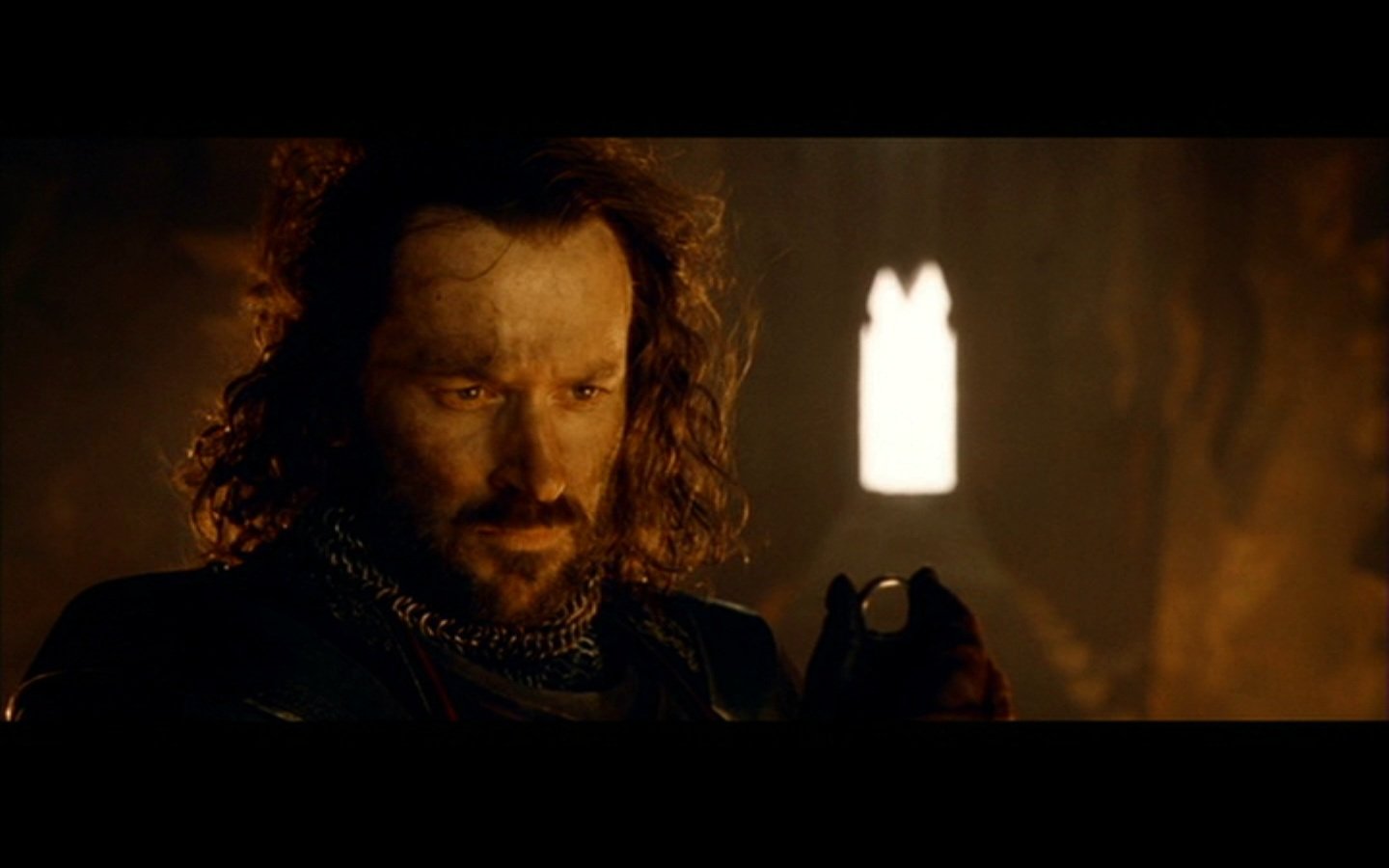 |
| Isildur and The One Ring |
Hrok then asked to see it, saying he wanted to know if it was really "as much a treasure as it is claimed." Hroar readily showed it too him and Hrok threw it into the sea after saying, "I have never seen a comparable treasure, and the reason you esteem the ring so highly is obvious. The best solution, it seems to me, is that neither of us, or, for that matter, anyone else should enjoy it." He had no right to such an action. His claim on the ring was small enough, and Hroar had traded half the kingdom for it. Hroar chopped of Hrok's foot in response. After healing, Hrok assembled an army with which he defeated and killed Hroar. Helgi then defeated Hrok and instead of slaying him, broke all his limbs so that he was a cripple the rest of his life. And this was all between family! Many people searched the waters for the ring and Hroar's son, Agnar, finally found it after diving for it.
So, that's a summary of the ring episode. Although this ring was not imbued with the magical and evil properties that The One Ring possessed, it was coveted in much the same way, resulting in wars and the loss of limbs (Frodo lost his finger, Hrok, his foot). Hrok referred to it as "the great ring," giving it a title, much like, "The One Ring." In The Lord of the Rings, it was suggested the the ring be thrown into the sea, but that idea was rejected because it could be found again eventually.
However, Hroar's ring could have been an arm ring and not a finger ring like The One Ring.
The Saga of Hrolf Kraki. Translated by Jesse L. Bylock. Published by Penguin Books, 1998.
Sunday, May 5, 2013
A thousand years ago feels like yesterday
I felt like they were my neighbors, my relations, my community, these Icelanders from a thousand years ago.
I think it was the style in which their sagas were written.
Many authors these days take an over-the-shoulder, inside-the-soul, point of view with their characters, telling you exactly what the character is thinking and feeling in every excruciating detail. I like that. However, the sagas were not written that way, they were written in a rather external fashion. Yet I felt close to the people.
They seemed real because the lens through which I saw them was as if I were a part of the community. I am told a bit of what they are feeling, I hear of their actions, I know who is best friends with who and how they are related. Just like in real life. In real life I don't know every thought, every pleasure, every pain that passes through my friends, let alone acquaintances that I see frequently. And so the sagas, by being distant, seem real because I see a community functioning, like my home school co/op, like my extended family, like my Christian community. I see the major events that take place and I hear a little of the inside scoop through those more directly involved.
Additionally the descriptions of people are sometimes vivid, so it's like you can see them. I can see their face and external appearance (physique, clothing), but I can't see their mind. Like real life.
Interestingly, books written in first person or with a very over-the-shoulder view often leave you guessing as to the person's looks.
They were so human, driven by their feelings of greed, anger, ambition, brokenheartedness and by what was acceptable in their culture. The women were not meek sheep in the kitchen. A number had strong characters and were driving forces in the stories as they struggled for revenge. And they often manipulated/strong-armed their husbands into getting their way.
And so the sagas easily bridge the gap between then and now, despite culture and language barriers.
I think it was the style in which their sagas were written.
Many authors these days take an over-the-shoulder, inside-the-soul, point of view with their characters, telling you exactly what the character is thinking and feeling in every excruciating detail. I like that. However, the sagas were not written that way, they were written in a rather external fashion. Yet I felt close to the people.
They seemed real because the lens through which I saw them was as if I were a part of the community. I am told a bit of what they are feeling, I hear of their actions, I know who is best friends with who and how they are related. Just like in real life. In real life I don't know every thought, every pleasure, every pain that passes through my friends, let alone acquaintances that I see frequently. And so the sagas, by being distant, seem real because I see a community functioning, like my home school co/op, like my extended family, like my Christian community. I see the major events that take place and I hear a little of the inside scoop through those more directly involved.
Additionally the descriptions of people are sometimes vivid, so it's like you can see them. I can see their face and external appearance (physique, clothing), but I can't see their mind. Like real life.
Interestingly, books written in first person or with a very over-the-shoulder view often leave you guessing as to the person's looks.
They were so human, driven by their feelings of greed, anger, ambition, brokenheartedness and by what was acceptable in their culture. The women were not meek sheep in the kitchen. A number had strong characters and were driving forces in the stories as they struggled for revenge. And they often manipulated/strong-armed their husbands into getting their way.
And so the sagas easily bridge the gap between then and now, despite culture and language barriers.
Thursday, April 4, 2013
Icelandic Sagas - Translation: What's Lost and Gained.
Somethings are just lost in translation, we all know that. If you can't read the original, somethings are found by reading translations by different authors.
I'm now reading The Laxdoela Saga, translated by A. Margaret Arent (copyright 1964). Some of the people in this saga also appeared in The Story of Burnt Njal, however their names are spelled differently. Hauskuld/Hoskuld. Unna/Unn. Snorri Godi/Snorri the Priest. Tongue/Tunga. "Godi" is a title for a priest/chieftain so instead of calling him "Snorri the Priest," she called him "Snorri Godi." Additionally, instead of translating the name of his home to "Tongue," she left it as "Tunga."
Snorri was one of those men. If you read either name by itself, it doesn't mean a whole lot. One must dig into the notes in the book and the history or Iceland itself.
Time makes a difference in translation. The sagas were written a long time ago and culture has changed considerably since then. The translators also come from different eras, affecting their translations. Sir George Webbe Dasent lived from 1817-1896 (translator of The Story of Burnt Njal, which was first published in 1861). We now live in a different era with different customs. Sir Dasent used archaic language in his translation (probably even archaic for his time), including English words that are no longer used but approximated the Icelandic word better than any words we have now.
For example, Dasent used the words "boun" and "busked" while Arent used more current language: "made ready, fitted out." Instead of saying "Easterling" she informs us the person is from Norway. Dasent used the word "daysmen" which refers to an arbitrator. This word appears in the King James Bible in Job 9:33. The King James Bible is from the 1600s, which is well before Dasent's time.
So, what we've got is a story from nearly a millennium ago, translated by a man who lived two hundred years ago (during the Victorian era) who used words atleast two hundred years older than himself (from Shakespeare's time), read by people of a vastly different era (us).
For more on the archaic words themselves:
Icelandic Sagas - A Cultural Glossary and Location Illuminator
Works Cited:
Arent, A. Margaret. The Laxdoela Saga. University of Washington Press, 1964
Dasent, Sir George Webbe. The Story of Burnt Njal. J. M. Dent and Sons LTD, 1960
I'm now reading The Laxdoela Saga, translated by A. Margaret Arent (copyright 1964). Some of the people in this saga also appeared in The Story of Burnt Njal, however their names are spelled differently. Hauskuld/Hoskuld. Unna/Unn. Snorri Godi/Snorri the Priest. Tongue/Tunga. "Godi" is a title for a priest/chieftain so instead of calling him "Snorri the Priest," she called him "Snorri Godi." Additionally, instead of translating the name of his home to "Tongue," she left it as "Tunga."
So, by reading both translations, the notes, and learning a little history, I learned what his name really was (Snorri Godi) and what it meant to those who heard it in his day (Snorri the Priest). "Godi" (more authentically: goði) doesn't just mean "priest," you have to understand how it was used in the days of the sagas. According to Arent in her introduction, the priests of the old Norse religion had lots of power (to be a priest was to be a chieftain). She further explains that when Iceland became a republic, the goðar (plural of goði) automatically became members of parliament, the lawmakers.
Time makes a difference in translation. The sagas were written a long time ago and culture has changed considerably since then. The translators also come from different eras, affecting their translations. Sir George Webbe Dasent lived from 1817-1896 (translator of The Story of Burnt Njal, which was first published in 1861). We now live in a different era with different customs. Sir Dasent used archaic language in his translation (probably even archaic for his time), including English words that are no longer used but approximated the Icelandic word better than any words we have now.
For example, Dasent used the words "boun" and "busked" while Arent used more current language: "made ready, fitted out." Instead of saying "Easterling" she informs us the person is from Norway. Dasent used the word "daysmen" which refers to an arbitrator. This word appears in the King James Bible in Job 9:33. The King James Bible is from the 1600s, which is well before Dasent's time.
So, what we've got is a story from nearly a millennium ago, translated by a man who lived two hundred years ago (during the Victorian era) who used words atleast two hundred years older than himself (from Shakespeare's time), read by people of a vastly different era (us).
For more on the archaic words themselves:
Icelandic Sagas - A Cultural Glossary and Location Illuminator
Works Cited:
Arent, A. Margaret. The Laxdoela Saga. University of Washington Press, 1964
Dasent, Sir George Webbe. The Story of Burnt Njal. J. M. Dent and Sons LTD, 1960
Saturday, March 2, 2013
Icelandic Sagas - A Cultural Glossary and Location Illuminator
Although the sagas are translated to English they may use words that are not as familiar to us. The translation I'm reading currently uses some lesser known vocabulary and archaic terms. Below is a list of some that I found in The Story of Burnt Njal, The Laxdoela Saga, and The Story of Rolf and the Viking Bow (although the latter is not a saga, it is written in that style and uses many of the same words and places.)
Icelandic place names tend to be descriptive of the place, and are often translated into English, which, although they make it easier for us to understand, does make it harder if you're trying to find a place on a map.
Glossary
The Althing/the Thing - Icelandic parliament/court system which began in 930 A.D.
Boun - to make or get ready. Or as an adverb: ready, prepared, destined. (http://www.thefreedictionary.com/Boun)
Busk - to make ready, prepare. A Scot's word from Old Norse būask. (http://www.thefreedictionary.com/Busk)
Combe - a deep narrow valley, or a valley on the side of a hill. A British word. (http://www.merriam-webster.com/dictionary/combe)
Dale - a valley
Easterling - a person from Norway. (From notes in The Story of Burnt Njal)
Ell - a term of measurement. For the Icelanders at the time of the sagas it was 18 inches long. "The Viking ell was the measure from the elbow to the tip of the middle finger, about 18 inches. The Viking ell or primitive ell was used in Iceland up to the 1200s." (http://en.wikipedia.org/wiki/Ell)
Fell - a high barren field or moor. From Middle English, from Old Norse fell, fjall mountain. (http://www.merriam-webster.com/dictionary/fell)
Fey - 1. fated to die, having a premonition of death. 2. able to see the future, having an otherworldly demeanor, crazy. (http://www.merriam-webster.com/dictionary/fey?show=0&t=1363108715)
Firth - a long narrow inlet of the sea. A Scots word, from Middle English furth from Old Norse fjördhr (The Free Dictionary.) Notice how the Old Norse word is close to fjord, which also means a narrow inlet of the sea, but refers specifically to those that are a "long, narrow, deep inlet of the sea between steep slopes;" it comes from the same Old Norse word fjördhr . (The Free Dictionary. ) The Icelandic word for firth is fjörđur (Dicts).
Vetch - a name that refers to a family of plants used for fodder or plant bed cover. Grows 1-4 feet tall. (http://www.merriam-webster.com/dictionary/vetch)
Westfirther - I think this means someone from the Westfjords. The Icelandic word for this location is Vestfirðir. The eth (the funny symbol) is pronounced like "th" in "the." So the word is roughly "vest-feer-theer" similar to "westfirther." Also, (and I think this is the real reason) "er" can be added to a place name to make it into a people group name. Examples: Iceland, Icelander. Michigan, Michigander. "Firth" is very close to the word "fjord" in origin, and somehow we got Westfirthers instead of Westfjorders. Perfectly plausible.
Locations mentioned in these two works
Broadfirth - is Breiðifjörður. It is a exactly what it's name means: A broad firth. It's the northernmost of the two largest bays on the western face of Iceland. Reykjavik is located on the southern one (Faxafloi).
See Wikipedia for more information.
Hawkdale - is Haukadalur, and it is a name shared by three valleys. One is in the Westfjords, one is in Snæfellsnes, and the third is a popular tourist destination, containing geysers, including the famous Geysir.
(Hawksdale locations listed on Wikipedia)
Hvammfirth - the southern inlet of Breiðifjörður (see map below).
Pentland firth - the strait between the Orkneys and Scotland (Wikipedia).
Snowfellsness - Snæfellsnes/snjófellsnes, the promontory dividing Breiðifjörður and Faxafloi.
Thingvellir - Icelandic: Þingvellir. The meeting place of the Althing. A valley with big rifts in it. See my post, Þingvellir - That Great Wonder of Iceland for a description using photos to illustrate.
Westfjords - Vestfirðir. The large peninsula above Breiðifjörður. Maps available here: Westfjords, Wikipedia
Resources:
I found the translation for Broadfirth and Snowfellness in The Saga Library, edited by William Morris and Eiríkr Magnússon
This link will take you to "Broadfirth" in the Index, where you can then search for other names.
The Story of Burnt Njal, translated by Sir George Webbe Dasent. J.M. Dent & Sons LTD, London, England. Published 1911. Reprinted 1960.
~This post will be updated as I continue reading the sagas. I am also working on a map with major places labeled, including Thingvellir.~
Icelandic place names tend to be descriptive of the place, and are often translated into English, which, although they make it easier for us to understand, does make it harder if you're trying to find a place on a map.
Glossary
The Althing/the Thing - Icelandic parliament/court system which began in 930 A.D.
Boun - to make or get ready. Or as an adverb: ready, prepared, destined. (http://www.thefreedictionary.com/Boun)
Busk - to make ready, prepare. A Scot's word from Old Norse būask. (http://www.thefreedictionary.com/Busk)
Combe - a deep narrow valley, or a valley on the side of a hill. A British word. (http://www.merriam-webster.com/dictionary/combe)
Dale - a valley
Easterling - a person from Norway. (From notes in The Story of Burnt Njal)
Ell - a term of measurement. For the Icelanders at the time of the sagas it was 18 inches long. "The Viking ell was the measure from the elbow to the tip of the middle finger, about 18 inches. The Viking ell or primitive ell was used in Iceland up to the 1200s." (http://en.wikipedia.org/wiki/Ell)
Fell - a high barren field or moor. From Middle English, from Old Norse fell, fjall mountain. (http://www.merriam-webster.com/dictionary/fell)
Fey - 1. fated to die, having a premonition of death. 2. able to see the future, having an otherworldly demeanor, crazy. (http://www.merriam-webster.com/dictionary/fey?show=0&t=1363108715)
Firth - a long narrow inlet of the sea. A Scots word, from Middle English furth from Old Norse fjördhr (The Free Dictionary.) Notice how the Old Norse word is close to fjord, which also means a narrow inlet of the sea, but refers specifically to those that are a "long, narrow, deep inlet of the sea between steep slopes;" it comes from the same Old Norse word fjördhr . (The Free Dictionary. ) The Icelandic word for firth is fjörđur (Dicts).
Vetch - a name that refers to a family of plants used for fodder or plant bed cover. Grows 1-4 feet tall. (http://www.merriam-webster.com/dictionary/vetch)
Westfirther - I think this means someone from the Westfjords. The Icelandic word for this location is Vestfirðir. The eth (the funny symbol) is pronounced like "th" in "the." So the word is roughly "vest-feer-theer" similar to "westfirther." Also, (and I think this is the real reason) "er" can be added to a place name to make it into a people group name. Examples: Iceland, Icelander. Michigan, Michigander. "Firth" is very close to the word "fjord" in origin, and somehow we got Westfirthers instead of Westfjorders. Perfectly plausible.
Locations mentioned in these two works
Broadfirth - is Breiðifjörður. It is a exactly what it's name means: A broad firth. It's the northernmost of the two largest bays on the western face of Iceland. Reykjavik is located on the southern one (Faxafloi).
See Wikipedia for more information.
Hawkdale - is Haukadalur, and it is a name shared by three valleys. One is in the Westfjords, one is in Snæfellsnes, and the third is a popular tourist destination, containing geysers, including the famous Geysir.
(Hawksdale locations listed on Wikipedia)
Hvammfirth - the southern inlet of Breiðifjörður (see map below).
Pentland firth - the strait between the Orkneys and Scotland (Wikipedia).
Snowfellsness - Snæfellsnes/snjófellsnes, the promontory dividing Breiðifjörður and Faxafloi.
Thingvellir - Icelandic: Þingvellir. The meeting place of the Althing. A valley with big rifts in it. See my post, Þingvellir - That Great Wonder of Iceland for a description using photos to illustrate.
Westfjords - Vestfirðir. The large peninsula above Breiðifjörður. Maps available here: Westfjords, Wikipedia
 |
| Map of Iceland |
 |
| Western Iceland |
Resources:
I found the translation for Broadfirth and Snowfellness in The Saga Library, edited by William Morris and Eiríkr Magnússon
This link will take you to "Broadfirth" in the Index, where you can then search for other names.
The Story of Burnt Njal, translated by Sir George Webbe Dasent. J.M. Dent & Sons LTD, London, England. Published 1911. Reprinted 1960.
~This post will be updated as I continue reading the sagas. I am also working on a map with major places labeled, including Thingvellir.~
Wednesday, February 20, 2013
Iceland and Middle-Earth
I recently started reading The Story of Burnt Njal, an Icelandic saga translated by Sir George Webbe Dasent. I'm not even half-way through and I found several points of comparison between this tale, Beowulf, and The Lord of the Rings.
Here is one quote I found particularly striking: "How the Lord of rings bereft thee." The notes say that "Lord of rings" is a "periphrasis for a chief" (The Story of Burnt Njal). As an interesting side note: the man of whom this speaks was also called a "gold-bestower" like something from Beowulf. Additionally, Beowulf speaks of good lords as those who give gifts to their followers, namely rings among gifts of gold and armor. There is a huge emphasis on rings as gifts in Beowulf.
The phrase "crack of doom" appears in The Story of Burnt Njal. In a viking's interpretation of a dream, he said, "But when ye heard a great din, then ye must have been shown the crack of doom, and ye shall all die speedily." In the Lord of the Rings, "the cracks of doom" is the name of the place in Mount Doom (a volcano) were the ring must be cast to destroy it.
Some names from The Story of Burnt Njal and The Story of Rolf and the Viking Bow bear similarities to those of the dwarves of Middle-Earth (a land created by Tolkien).
The name "Thrain" is found in The Story of Burnt Njal and The Hobbit.
"Thorarin" from the saga is similar to "Thorin" from The Hobbit.
In The Story of Rolf and the Viking Bow one finds the names "Frodi, Gisli, Snorri, Kari, and Flosi." These names end in "i" and "ri" like these dwarves in the Hobbit: Dori, Nori, and Ori. Also "Frodo" is like to "Frodi." However, Tolkien was not imitating these specific names for the dwarves' names stem from The Poetic Edda. Christopher Tolkien wrote, "It is at any rate well-known that he derived the names of the dwarves in The Hobbit from the first of the poems in the Edda, the Völuspá. 'the prophecy of Sibyl' " (Christopher Tolkien, Forward, in The Legend of Sigurd and Gudrún).
 I saw the word "Gimli" on a building in Iceland, and it is also the name of a dwarf in The Lord of the Rings.
"Easterling" in The Story of Burnt Njal refers to a person from Norway. This term is used of a people group in Middle-Earth.
"The Mark" is a location in Iceland and Middle-Earth. The phrase: "The men of the mark" appears in both.
One must note that The Story of Burnt Njal, as I am reading it, is a translation. There are probably other acceptable ways to translate some of these terms I mentioned above; these are not the original Icelandic.
For example: several place names include "holt" in The Story of Burnt Njal and at least once in Middle-Earth (Dimholt)."Holt" is just a word for "wood" or "wooded hill" and is an English word, not Icelandic, it's just interesting that Dasent and Tolkien used it. Dasent could have said "XXXXwood" instead of "XXXXholt" but he didn't do that.
Anyhow, it's quite exciting to stumble across these similarities between the tales!
For more comparisons between Iceland and Middle-Earth see:
The Icelandic horse and its home
Volcanoes, Geysers, and Trolls, oh my!
Here is one quote I found particularly striking: "How the Lord of rings bereft thee." The notes say that "Lord of rings" is a "periphrasis for a chief" (The Story of Burnt Njal). As an interesting side note: the man of whom this speaks was also called a "gold-bestower" like something from Beowulf. Additionally, Beowulf speaks of good lords as those who give gifts to their followers, namely rings among gifts of gold and armor. There is a huge emphasis on rings as gifts in Beowulf.
The phrase "crack of doom" appears in The Story of Burnt Njal. In a viking's interpretation of a dream, he said, "But when ye heard a great din, then ye must have been shown the crack of doom, and ye shall all die speedily." In the Lord of the Rings, "the cracks of doom" is the name of the place in Mount Doom (a volcano) were the ring must be cast to destroy it.
Some names from The Story of Burnt Njal and The Story of Rolf and the Viking Bow bear similarities to those of the dwarves of Middle-Earth (a land created by Tolkien).
The name "Thrain" is found in The Story of Burnt Njal and The Hobbit.
"Thorarin" from the saga is similar to "Thorin" from The Hobbit.
In The Story of Rolf and the Viking Bow one finds the names "Frodi, Gisli, Snorri, Kari, and Flosi." These names end in "i" and "ri" like these dwarves in the Hobbit: Dori, Nori, and Ori. Also "Frodo" is like to "Frodi." However, Tolkien was not imitating these specific names for the dwarves' names stem from The Poetic Edda. Christopher Tolkien wrote, "It is at any rate well-known that he derived the names of the dwarves in The Hobbit from the first of the poems in the Edda, the Völuspá. 'the prophecy of Sibyl' " (Christopher Tolkien, Forward, in The Legend of Sigurd and Gudrún).
I saw the word "Gimli" on a building in Iceland, and it is also the name of a dwarf in The Lord of the Rings. "Easterling" in The Story of Burnt Njal refers to a person from Norway. This term is used of a people group in Middle-Earth.
"The Mark" is a location in Iceland and Middle-Earth. The phrase: "The men of the mark" appears in both.
One must note that The Story of Burnt Njal, as I am reading it, is a translation. There are probably other acceptable ways to translate some of these terms I mentioned above; these are not the original Icelandic.
For example: several place names include "holt" in The Story of Burnt Njal and at least once in Middle-Earth (Dimholt)."Holt" is just a word for "wood" or "wooded hill" and is an English word, not Icelandic, it's just interesting that Dasent and Tolkien used it. Dasent could have said "XXXXwood" instead of "XXXXholt" but he didn't do that.
Anyhow, it's quite exciting to stumble across these similarities between the tales!
For more comparisons between Iceland and Middle-Earth see:
The Icelandic horse and its home
Volcanoes, Geysers, and Trolls, oh my!
Thursday, January 31, 2013
The Icelandic horse and its home
Once out of Reykjavik and the lava fields, there are horses basically everywhere you look.
I felt like I was driving through Rohan as it is depicted in the film The Lord of the Rings. The horses grazed on the yellow grass on the flat plains, sometimes broken by ridges and large rocks, or small hills. Behind it all the blue mountains capped with white snow rose with majesty.
Rohan was shot in New Zealand. It's interesting how similar the landscape is.
Although the landscape is similar to Rohan, the horses are not like those in the book or film. The book says, "Their horses were of great stature, strong and clean-limbed; their grey coats glistened, their long tails flowed in the wind, their, manes were braided on their proud necks." -The Two Towers, by J.R.R. Tolkien
The Icelandic horse is a short animal (extra shaggy in my photos because it is winter). Foreign horses are not allowed to enter the country and once an Icelandic horse leaves the country it can never return, so all horses on the island are purebred Icelandic horses.
The horses are generally friendly too. Whenever they saw us nearing the fences, a few of them would come over to it and let you pet them. Also, they seem to be kept in groups. I don't remember seeing a lone horse in a pen.
All photos are my own. Please give all photo credit to Edana A.
I felt like I was driving through Rohan as it is depicted in the film The Lord of the Rings. The horses grazed on the yellow grass on the flat plains, sometimes broken by ridges and large rocks, or small hills. Behind it all the blue mountains capped with white snow rose with majesty.
 |
| Horses |
 |
| The plains |
 |
| Driving through Rohan yet in Iceland |
Although the landscape is similar to Rohan, the horses are not like those in the book or film. The book says, "Their horses were of great stature, strong and clean-limbed; their grey coats glistened, their long tails flowed in the wind, their, manes were braided on their proud necks." -The Two Towers, by J.R.R. Tolkien
The Icelandic horse is a short animal (extra shaggy in my photos because it is winter). Foreign horses are not allowed to enter the country and once an Icelandic horse leaves the country it can never return, so all horses on the island are purebred Icelandic horses.
The horses are generally friendly too. Whenever they saw us nearing the fences, a few of them would come over to it and let you pet them. Also, they seem to be kept in groups. I don't remember seeing a lone horse in a pen.
 |
| Coming to say hello |
 |
| Grass |
 |
| Shaggy coat |
 |
| Iceland is my home |
All photos are my own. Please give all photo credit to Edana A.
Wednesday, January 30, 2013
Iceland and The Story of Rolf and the Viking Bow
 The Story of Rolf and the Viking Bow has long been one of my favorite books. Allen French did a wonderful job when he wrote this book for just as The Secret of Kells really captures Irish history and lore, so this book captures many elements of Icelandic history, culture, and lore.
 Just some notes on Icelandic letters that are not in our alphabet and on the Alþingi:
þ makes the "th" sound in "thing" (unvocalized "th").
ð makes the "th" sound in "that" (vocalized "th").
The Alþingi is the Icelandic parliament. It began in 930 A.D. and it was in session for many years until Iceland came under foreign powers. It was started again after WWII and is currently functioning, though it is now located in Reykjavik.
Þingvellir is a plain that is its historic location.
Here is a list of common elements between the book and things I've learned about Iceland or experienced on my trip.
1. The Story of Rolf and the Viking Bow was written in a saga style. Iceland has a collection of sagas called Íslendingasögur, and I am guessing that Allen French read those for he mentions some of the characters in his book. Grettir the Strong, and Njal, namely.
2. The names of at least two of the characters are/have been used recently. In the flea market I saw the name "Einar" as an author's name on a book. "Snorri" appeared on a building from the 18 or 1900s.
 |
| Location of Snorri's booth. The wall remnants date from a later time. |
(See my next post for more on the Alþingi and what Allen French has to say about it.)
Allen French's description of
Þingvellir fits with what I saw there.
4. Rolf's family owned sheep. Woolen goods are a hot commodity in Iceland these days. They are in every tourist shop and the Icelanders themselves frequently wear woolen sweaters.
5. In the story the sheep were marked by cuts on the ears, and had to be sorted when they were brought down from summer pastures for the winter. This is still done today. Their ears are marked, the sheep are brought down according to customs set by the Alþingi (Althingi) long ago, and they are sorted using a sheep sorter.
 |
| Icelandic cliffs |
7. "Heimskur" is the Icelandic word for stupid and contains the image of one who sits at home and doesn't travel. In the book it mentions that young men would travel abroad and that it was an important part of their passage into adulthood.
8. Ghosts were treated as real in the book. Many Icelanders are a bit into mysticism and believe in ghosts or elves (short, invisible beings).
9. According to French, it was customary for men to keep whatever wealth the sea washed ashore from ship wrecks off the rugged coast. The Icelanders in Rolf's day were delighted with the goods that washed ashore. The same was true in the 1800s. People were glad to get the timbers and things from the shipwrecks, even though it was too bad about the sailors who drowned in the wreck.
One man in Reykjavik collects odds and ends from the sea and has quite a stash of large metal contraptions. The large silver object looks like a space escape pod, other objects stick up like odd towers and are gray and rusty.
 |
| What the sea brought |
10. Icelanders have traditionally been farmers. Rolf and his family were farmers. Characters in the sagas and folklore were farmers too, even if they were also great warriors.
11. Fishing is also important to Iceland. In addition to his other skills, Rolf knew how to fish. In current day Iceland, dried fish is sold at the flea market and the grocery store. The story speaks of racks for drying fish in the Orkneys and also Icelanders having dried fish on hand. They still use wooden racks for drying fish.
 |
| Geysir (the geyser from whose name the word "geyser" is from.) |
All photos are my own except the photo of the book.
Monday, December 24, 2012
Merry Christmas! ~Lore and Literature Style~
Here is a selection of Christmas greetings in several interesting languages, group loosely by family or similarities.
Heughliche Winachten un 'n moi Nijaar ~Low Saxon~ Merry Christmas and a Happy New Year
Compare to German: Fröhliche Weihnachten
Glæd Geol ~Old English ~Merry Christmas
Glædelig jul ~Danish~ Merry Christmas
Gleðileg jól ~Icelandic~ Merry Christmas
Gleðilig jól ~Faroese~ Merry Christmas
A Blythe Yule an a Guid Hogmanay/Merry Christmas an a Guid Hogmanay ~Scots English~Merry Christmas and Happy New Year
Nollaig shona duit ~ Irish~ Merry Christmas to you
Nollaig Chridheil dhuibh ~Scottish Gaelic~ Merry Christmas
Nadolig llawen ~Welsh~ Merry Christmas
Nadelik Lowen ~Cornish~ Merry Christmas
Nedeleg laouen ~Breton~ Merry Christmas
Alassë a Hristomerendë ~Quenya (Elvish)~ Joyous Feast of Christ
Mereth Veren e-Doled Eruion ~Sindarin (Elvish)~ Joyous Feast of the Coming of the Son of God.
Quenya and Sindarin are both elvish langauges created by J.R.R. Tolkien.
Heughliche Winachten un 'n moi Nijaar ~Low Saxon~ Merry Christmas and a Happy New Year
Compare to German: Fröhliche Weihnachten
Glæd Geol ~Old English ~Merry Christmas
Glædelig jul ~Danish~ Merry Christmas
Gleðileg jól ~Icelandic~ Merry Christmas
Gleðilig jól ~Faroese~ Merry Christmas
A Blythe Yule an a Guid Hogmanay/Merry Christmas an a Guid Hogmanay ~Scots English~Merry Christmas and Happy New Year
Nollaig shona duit ~ Irish~ Merry Christmas to you
Nollaig Chridheil dhuibh ~Scottish Gaelic~ Merry Christmas
Nadolig llawen ~Welsh~ Merry Christmas
Nadelik Lowen ~Cornish~ Merry Christmas
Nedeleg laouen ~Breton~ Merry Christmas
Alassë a Hristomerendë ~Quenya (Elvish)~ Joyous Feast of Christ
Mereth Veren e-Doled Eruion ~Sindarin (Elvish)~ Joyous Feast of the Coming of the Son of God.
Quenya and Sindarin are both elvish langauges created by J.R.R. Tolkien.
Subscribe to:
Posts (Atom)